



Publications
PAPERS
Comparing Gallyas and AT8 staining for quantification of tau pathology in subregions of the human hippocampus
Published January 9, 2026

Laminar organization of pyramidal neuron cell types defines distinct CA1 hippocampal subregions.
Published December 3, 2025

Electric field stimulation directs target-specific axon regeneration and partial restoration of vision after optic nerve crush injury
Published January 9, 2025

Further refining the boundaries of the hippocampus CA2 with gene expression and connectivity: Potential subregions and heterogeneous cell types
Published February 14, 2023

Integrating Data Directly into Publications with Augmented Reality and Web-Based Technologies – Schol-AR
Published June 24, 2022

The mouse cortico–basal ganglia–thalamic network
Published October 6, 2021

Cellular anatomy of the mouse primary motor cortex
Published October 6, 2021

Organization of the inputs and outputs of the mouse superior colliculus
Published June 28, 2021

Connectivity characterization of the mouse basolateral amygdalar complex
Published May 17, 2021

Homologous laminar organization of the mouse and human subiculum
Published February 12, 2021

An open access mouse brain flatmap and upgraded rat and human brain flatmaps based on current reference atlases
Published June 8, 2020

Extrastriate connectivity of the mouse dorsal lateral geniculate thalamic nucleus
Published June 15, 2019
Precise segmentation of densely interweaving neuron clusters using G-Cut
Published April 04, 2019
Integration of gene expression and brain-wide connectivity reveals the multiscale organization of mouse hippocampal networks
Published October 08, 2018

The mouse cortico-striatal projectome
Published August 01, 2016

Neural networks of the mouse neocortex
Published February 27, 2014
Comparing Gallyas and AT8 staining for quantification of tau pathology in subregions of the human hippocampus
Abstract: Gallyas silver staining and AT8 immunostaining are frequently used to stage tau pathology in post-mortem Alzheimer disease (AD) brains. Because of differential labeling of tau aggregation types, however, these methods result in strikingly different patterns of pathology when used in adjacent sections of the same brain. How Gallyas versus AT8 staining impacts the quantification of tau pathology distribution across brain areas and affect analysis of tau and cognitive impairment is unknown. We performed a side-by-side comparison of AT8 versus Gallyas-stained hippocampal sections from 34 patients from the University of Southern California (USC) Alzheimer’s Disease Research Center (ADRC). Using images of Gallyas and AT8 stained sections, we computed overall tau density in hippocampal subregions as well as manual tangle counts and compared each of them to cognitive variables like Clinical Dementia Rating and Mini Mental State Exam in the patients. We found that AT8 had a much higher density of staining overall, and the two stains had differing distributions, with increased AT8 in Brodmann area 35 and CA1. Both stains related to cognition differentially, and Gallyas density was significantly related to post-mortem interval. These findings contribute to our understanding of how tau pathology stain choice might influence the characterization of AD., DOI: 10.1093/jnen/nlaf149.

Publications
PAPERS
Laminar organization of pyramidal neuron cell types defines distinct CA1 hippocampal subregions.
Published December 3, 2025
Further refining the boundaries of the hippocampus CA2 with gene expression and connectivity: Potential subregions and heterogeneous cell types
Published February 14, 2023
Integrating Data Directly into Publications with Augmented Reality and Web-Based Technologies – Schol-AR
Published June 24, 2022
Homologous laminar organization of the mouse and human subiculum
Published February 12, 2021
An open access mouse brain flatmap and upgraded rat and human brain flatmaps based on current reference atlases
Published June 8, 2020
Integration of gene expression and brain-wide connectivity reveals the multiscale organization of mouse hippocampal networks
Published October 08, 2018
Laminar organization of pyramidal neuron cell types defines distinct CA1 hippocampal subregions.
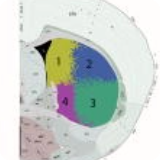
Abstract: Investigating the cell type organization of hippocampal CA1 is essential for understanding its role in memory and cognition and its susceptibility to neurological disorders like Alzheimer’s disease and epilepsy. Multiple studies have identified different organizational principles for gene expression and how it reflects cell types within the CA1 pyramidal layer including gradients or mosaic. Here, we identify sublaminar gene expression patterns within the mouse CA1 pyramidal layer that span across the entire hippocampal axis. Our findings reveal that CA1 subregions (CA1d, CA1i, CA1v, CA1vv) contain differentially distributed layers of constituent cell types and can be identified by regional gene expression signatures. This work offers a new perspective on the organization of CA1 cell types that can be used to further explore hippocampal cell types across species., DOI: 10.1038/s41467-025-66613-y.
Publications
PAPERS
Comparing Gallyas and AT8 staining for quantification of tau pathology in subregions of the human hippocampus
Published January 9, 2026
Comparing Gallyas and AT8 staining for quantification of tau pathology in subregions of the human hippocampus
Abstract: Gallyas silver staining and AT8 immunostaining are frequently used to stage tau pathology in post-mortem Alzheimer disease (AD) brains. Because of differential labeling of tau aggregation types, however, these methods result in strikingly different patterns of pathology when used in adjacent sections of the same brain. How Gallyas versus AT8 staining impacts the quantification of tau pathology distribution across brain areas and affect analysis of tau and cognitive impairment is unknown. We performed a side-by-side comparison of AT8 versus Gallyas-stained hippocampal sections from 34 patients from the University of Southern California (USC) Alzheimer’s Disease Research Center (ADRC). Using images of Gallyas and AT8 stained sections, we computed overall tau density in hippocampal subregions as well as manual tangle counts and compared each of them to cognitive variables like Clinical Dementia Rating and Mini Mental State Exam in the patients. We found that AT8 had a much higher density of staining overall, and the two stains had differing distributions, with increased AT8 in Brodmann area 35 and CA1. Both stains related to cognition differentially, and Gallyas density was significantly related to post-mortem interval. These findings contribute to our understanding of how tau pathology stain choice might influence the characterization of AD., DOI: 10.1093/jnen/nlaf149.
Publications
PAPERS
Electric field stimulation directs target-specific axon regeneration and partial restoration of vision after optic nerve crush injury
Published January 9, 2025
Extrastriate connectivity of the mouse dorsal lateral geniculate thalamic nucleus
Published June 15, 2019
Electric field stimulation directs target-specific axon regeneration and partial restoration of vision after optic nerve crush injury
Abstract: Failure of central nervous system (CNS) axons to regenerate after injury results in permanent disability. Several molecular neuro-protective and neuro-regenerative strategies have been proposed as potential treatments but do not provide the directional cues needed to direct target-specific axon regeneration. Here, we demonstrate that applying an external guidance cue in the form of electric field stimulation to adult rats after optic nerve crush injury was effective at directing long-distance, target-specific retinal ganglion cell (RGC) axon regeneration to native targets in the diencephalon. Stimulation was performed with asymmetric charged-balanced (ACB) waveforms that are safer than direct current and more effective than traditional, symmetric biphasic waveforms. In addition to partial anatomical restoration, ACB waveforms conferred partial restoration of visual function as measured by pattern electroretinogram recordings and local field potential recordings in the superior colliculus—and did so without the need for genetic manipulation. Our work suggests that exogenous electric field application can override cell-intrinsic and cell-extrinsic barriers to axon regeneration, and that electrical stimulation performed with specific ACB waveforms may be an effective strategy for directing anatomical and functional restoration after CNS injury., DOI: 10.1371/journal.pone.0315562.
Publications
PAPERS
The mouse cortico–basal ganglia–thalamic network
Published October 6, 2021
Cellular anatomy of the mouse primary motor cortex
Published October 6, 2021
Organization of the inputs and outputs of the mouse superior colliculus
Published June 28, 2021
Connectivity characterization of the mouse basolateral amygdalar complex
Published May 17, 2021
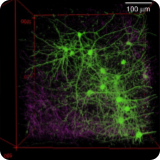
Precise segmentation of densely interweaving neuron clusters using G-Cut
Published April 04, 2019
The mouse cortico-striatal projectome
Published August 01, 2016
Neural networks of the mouse neocortex
Published February 27, 2014
The mouse cortico–basal ganglia–thalamic network
Abstract: The cortico–basal ganglia–thalamo–cortical loop is one of the fundamental network motifs in the brain. Revealing its structural and functional organization is critical to understanding cognition, sensorimotor behaviour, and the natural history of many neurological and neuropsychiatric disorders. Classically, this network is conceptualized to contain three information channels: motor, limbic and associative1,2,3,4. Yet this three-channel view cannot explain the myriad functions of the basal ganglia. We previously subdivided the dorsal striatum into 29 functional domains on the basis of the topography of inputs from the entire cortex5. Here we map the multi-synaptic output pathways of these striatal domains through the globus pallidus external part (GPe), substantia nigra reticular part (SNr), thalamic nuclei and cortex. Accordingly, we identify 14 SNr and 36 GPe domains and a direct cortico-SNr projection. The striatonigral direct pathway displays a greater convergence of striatal inputs than the more parallel striatopallidal indirect pathway, although direct and indirect pathways originating from the same striatal domain ultimately converge onto the same postsynaptic SNr neurons. Following the SNr outputs, we delineate six domains in the parafascicular and ventromedial thalamic nuclei. Subsequently, we identify six parallel cortico–basal ganglia–thalamic subnetworks that sequentially transduce specific subsets of cortical information through every elemental node of the cortico–basal ganglia–thalamic loop. Thalamic domains relay this output back to the originating corticostriatal neurons of each subnetwork in a bona fide closed loop. https://www.nature.com/articles/s41586-021-03993-3.